

Wifi Marketing (or Wi-Fi advertising) It’s not just about providing free internet access; it’s also a smart marketing tool that helps businesses proactively collect customer data.

1. What is Wifi Marketing?
Wifi Marketing
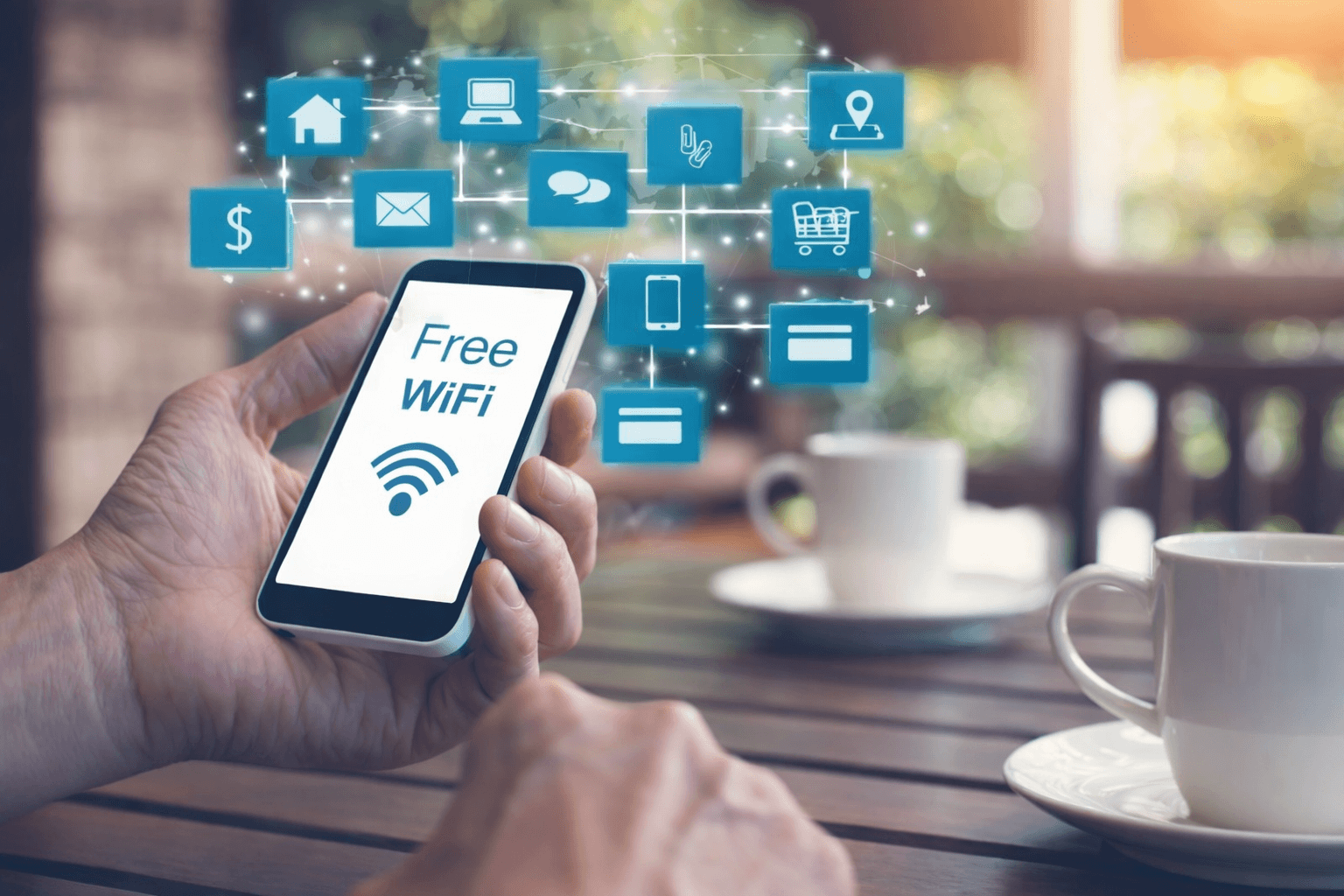
2. How does Wifi Marketing work?
- Personal information login: Users fill in details like name, email, and phone number
- Social login: Users sign in via Facebook, Google, or other social platforms, allowing businesses to collect profile data
- Survey-based login: Users answer short questions about preferences, needs, or service feedback
- One-click access: Users simply tap “Connect” or “Agree to terms,” often with ads displayed during access
1. Network Hardware
Includes routers, access points, and WiFi broadcasting devices configured to handle user redirection and bandwidth management.
2. Management Software
A central platform that allows businesses to design login pages, manage marketing campaigns, and analyze collected data.
3. Data Analytics System
Tools that process user data, track online behavior, and generate detailed reports on campaign performance.
3. What are the benefits of Wi-Fi Marketing for businesses and users?
Wi-Fi marketing creates a win-win model for both businesses and users, where each party receives the value they desire.
3.1 For businesses
Implementing Wifi Marketing helps businesses reap benefits that go far beyond simply providing free Wifi:
– Collecting valuable customer data: Through the login process, businesses can collect personal information such as name, email, phone number, and even demographic data from social media accounts. This data forms the basis for building a database for personalized marketing strategies.
– Brand promotion and increased awareness: The Wi-Fi login page becomes an exclusive digital advertising space for businesses, with a near 100% reach to customers at the business location. This helps enhance brand recognition and create a professional, modern impression.
– Increase engagement and length of stay: Free Wi-Fi encourages customers to stay longer at business locations. At cafes, the average length of stay increases by 40-60 minutes when Wi-Fi is available, creating opportunities for higher spending.
– Behavioral analysis and space optimization: Data on online connection time, location, and behavior helps businesses better understand their customers, thereby optimizing store layout, service hours, and marketing strategies.
– Location-based and real-time marketing: Businesses can send notifications and special offers directly to customers’ devices while they are in the store, increasing the likelihood of conversions into transactions.
– Use costs effectively: Compared to traditional advertising channels, Wifi Marketing is often less expensive but can achieve higher engagement rates.
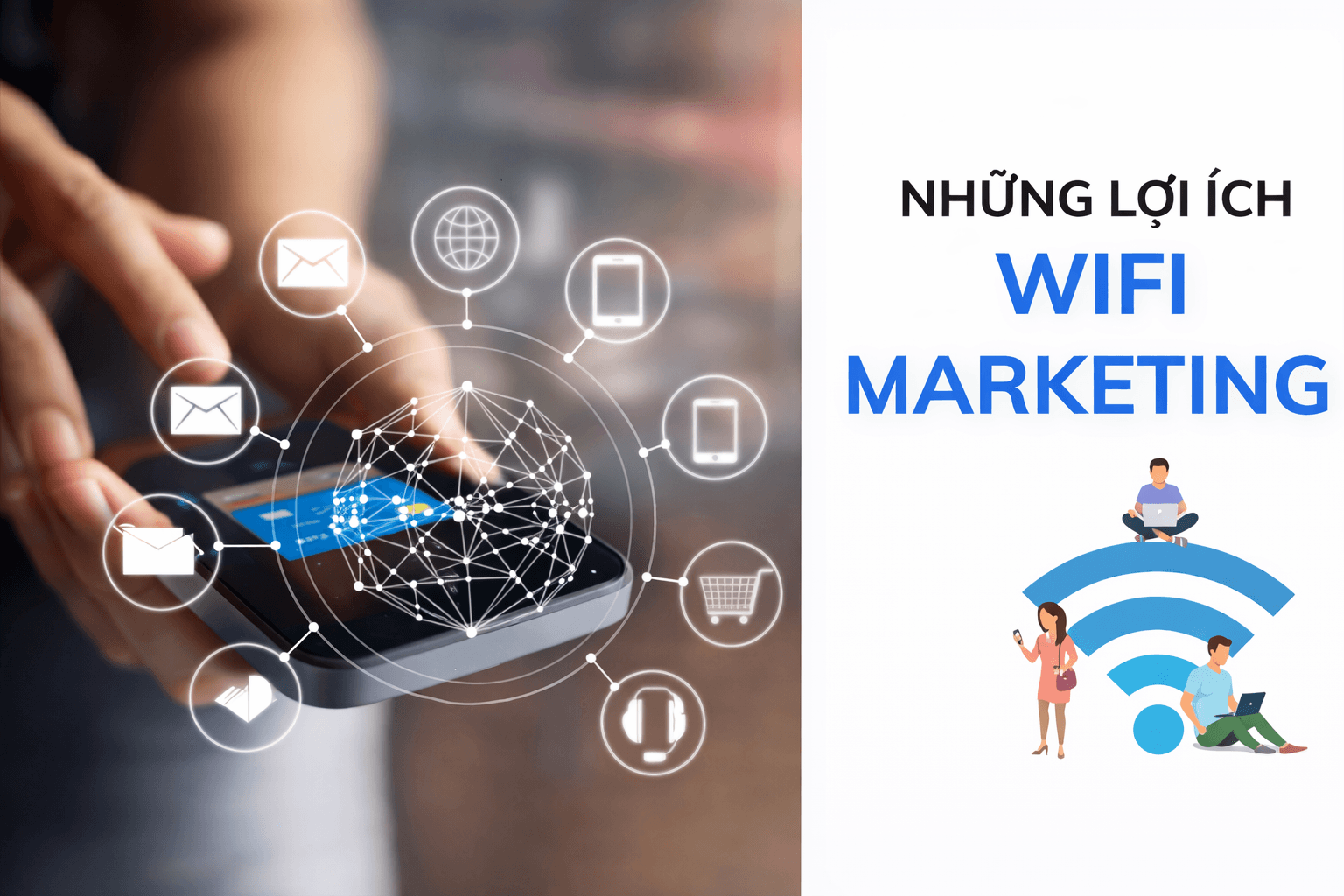
3.2 For users
Customers also receive many benefits from using the company’s Wifi Marketing services:
– Free and convenient internet access: The most obvious benefit is that users get access to a quality internet connection free of charge, saving them mobile data and ensuring a stable connection.
– Enjoy special offers and promotions: Many businesses offer discount coupons, special deals, or exclusive content to their Wi-Fi users. This adds value to the customer experience.
– Get information about suitable products and services:Users receive information about products and services relevant to their current needs and context, making the search and purchase decision process more convenient.
– Improve the on-site experience: Many Wi-Fi marketing systems provide useful information such as maps, directions, or location-based recommendations, enriching the customer experience.
Starbucks is a prime example of success with its Wi-Fi marketing system. When customers connect to Starbucks’ Wi-Fi network, they not only get free internet but are also integrated into the loyalty program, receive notifications about new drinks, and even place orders online.
4. Common models and applications of Wifi Marketing
Wifi Marketing is not a single, one-size-fits-all solution; there are many different models, each serving specific business goals and suited to different types of businesses. The following are the most common models:
4.1 Information gathering model (Data Collection Model)
4.2 Social media login model (Social Login Model)
4.3 Video advertising model (Video Ad Model)
4.4 Survey model (Survey Model)
4.5 Industry-specific applications
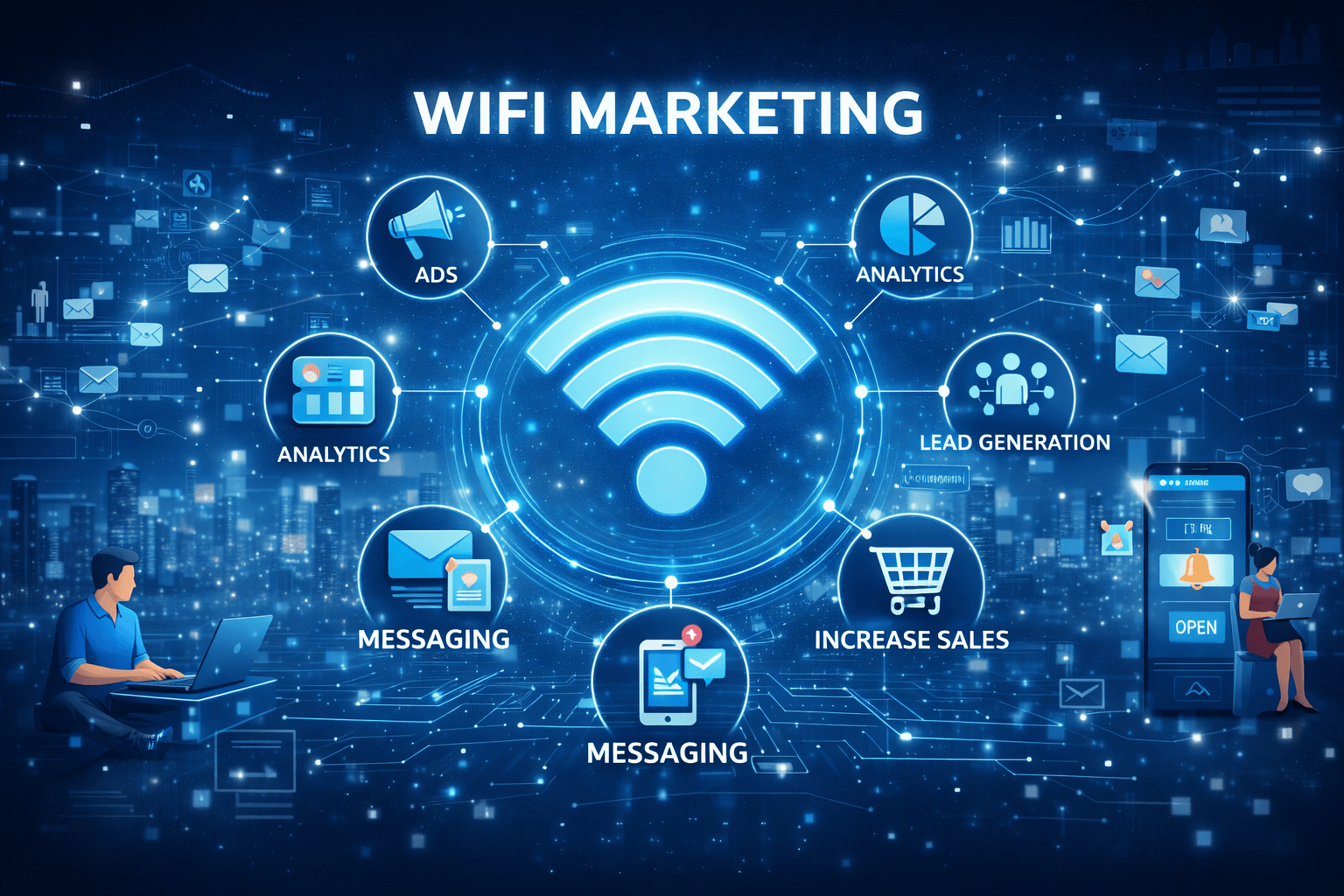
Wifi Marketing can also be flexibly applied in many different business sectors:
– Restaurants and Coffee: In addition to collecting customer information, restaurants also use Wi-Fi marketing to promote special menus, happy hour schedules, and upcoming events. Some restaurants even integrate features for making reservations or ordering food online through their Wifi login page.
– Hotels and Resorts: Hotels use Wi-Fi marketing not only to manage internet access but also to promote services such as spas, restaurants, and on-site recreational activities. Through analyzing connection data, they can adjust peak hours for services and provide customers with the best possible experience.
– Retail and Shopping Malls: Retail stores use Wifi Marketing to guide customers to promotions, new products, and create heat maps of customer traffic within the store. This information helps optimize product and staff layouts.
– Airports and Public Transportation: At airports, Wi-Fi marketing is used to provide flight information, gate directions, and advertise airport services. Analyzing connection times also helps manage passenger flow and design airport spaces more efficiently.
– Education and Healthcare: Schools and hospitals use Wi-Fi marketing to provide information about services, schedules, and important instructions. In the healthcare sector, some hospitals even integrate online appointment scheduling and consultation systems via Wi-Fi.