


In MEP systems, Plumbing (P) – water supply, drainage, and fire protection (PCCC) is an essential component that ensures stable operation, safety, and compliance with technical standards for all types of projects, from residential to industrial.
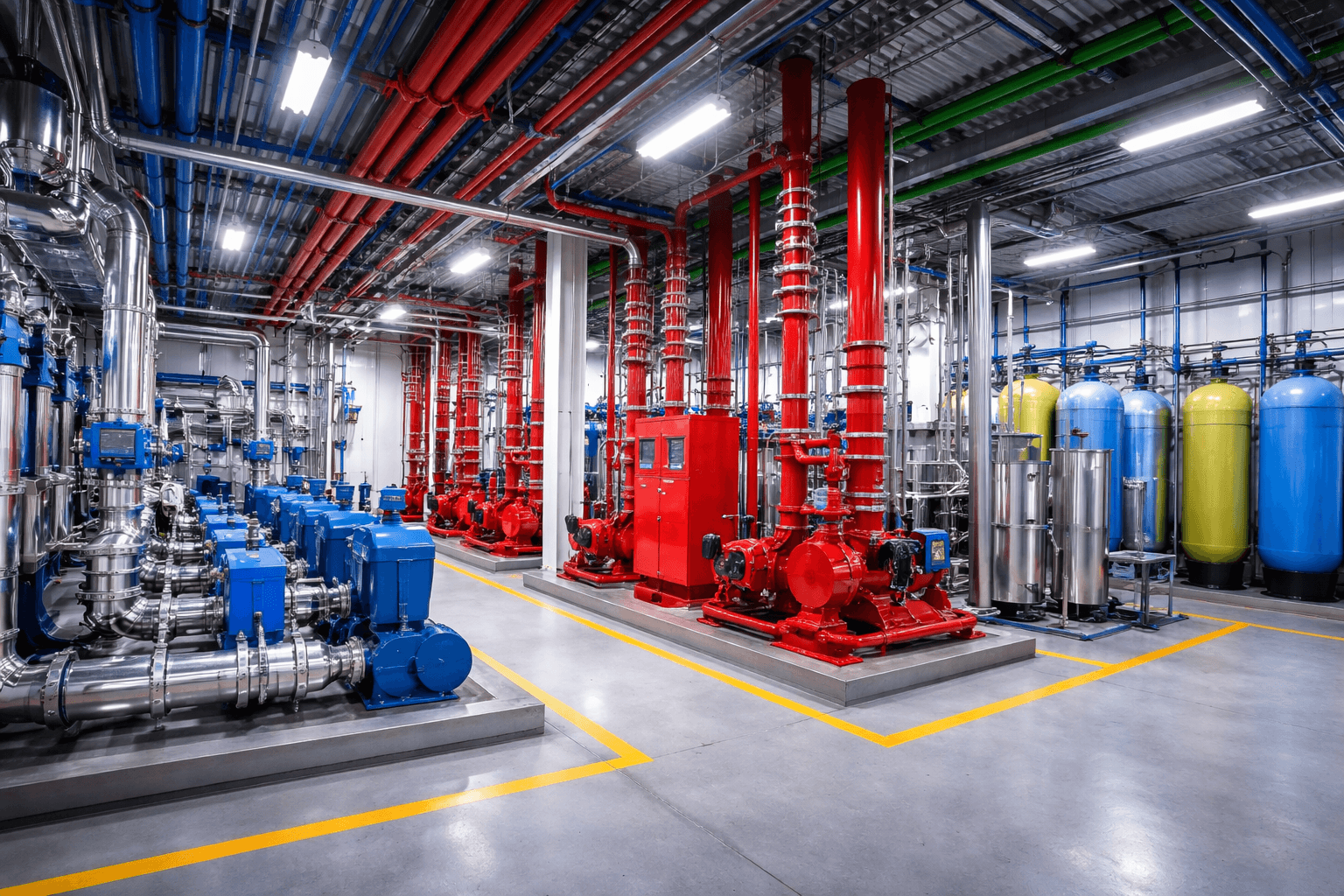
A well-designed plumbing system helps to:
✔ Provide a stable water supply
✔ Ensure fast drainage and prevent water stagnation
✔ Enhance fire safety
✔ Optimize operation and maintenance costs
1. Water Supply System
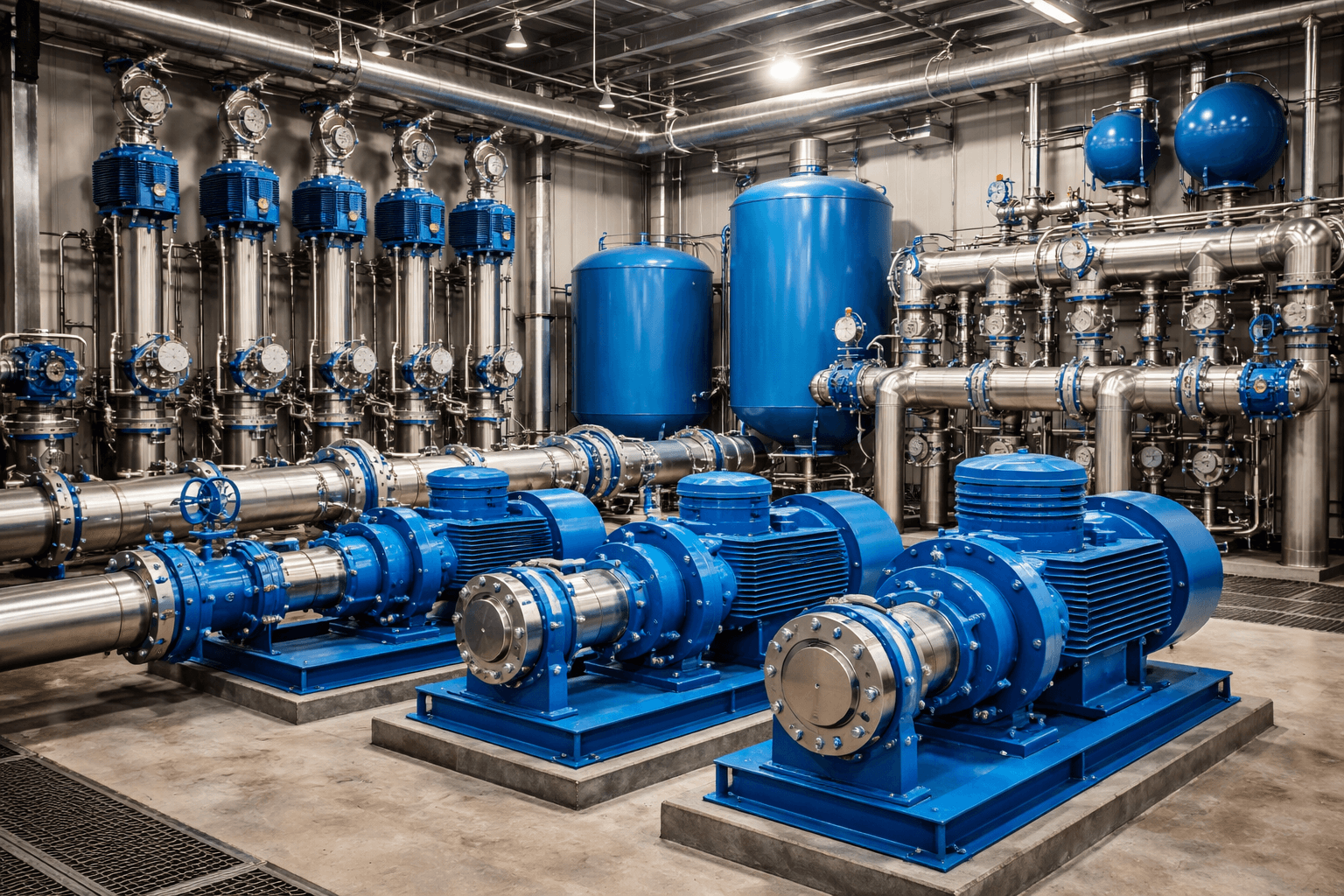
Concept
The water supply system is responsible for delivering clean water to usage areas such as:
- Domestic use (restrooms, kitchens)
- Production processes
- Fire protection systems
Main Components
- Water source (municipal supply, wells, storage tanks)
- Underground and rooftop water tanks
- Water supply piping (PPR, HDPE, uPVC)
- Valves and flow meters
- End-use fixtures (faucets, showers, sanitary equipment)
Operating Principle
Water is pumped from the source into storage tanks → then distributed through the piping system → to end-use points.
Design Requirements
- Stable water pressure
- Hygienic conditions, no leakage
- Separation from the drainage system
2. Water Pumping System
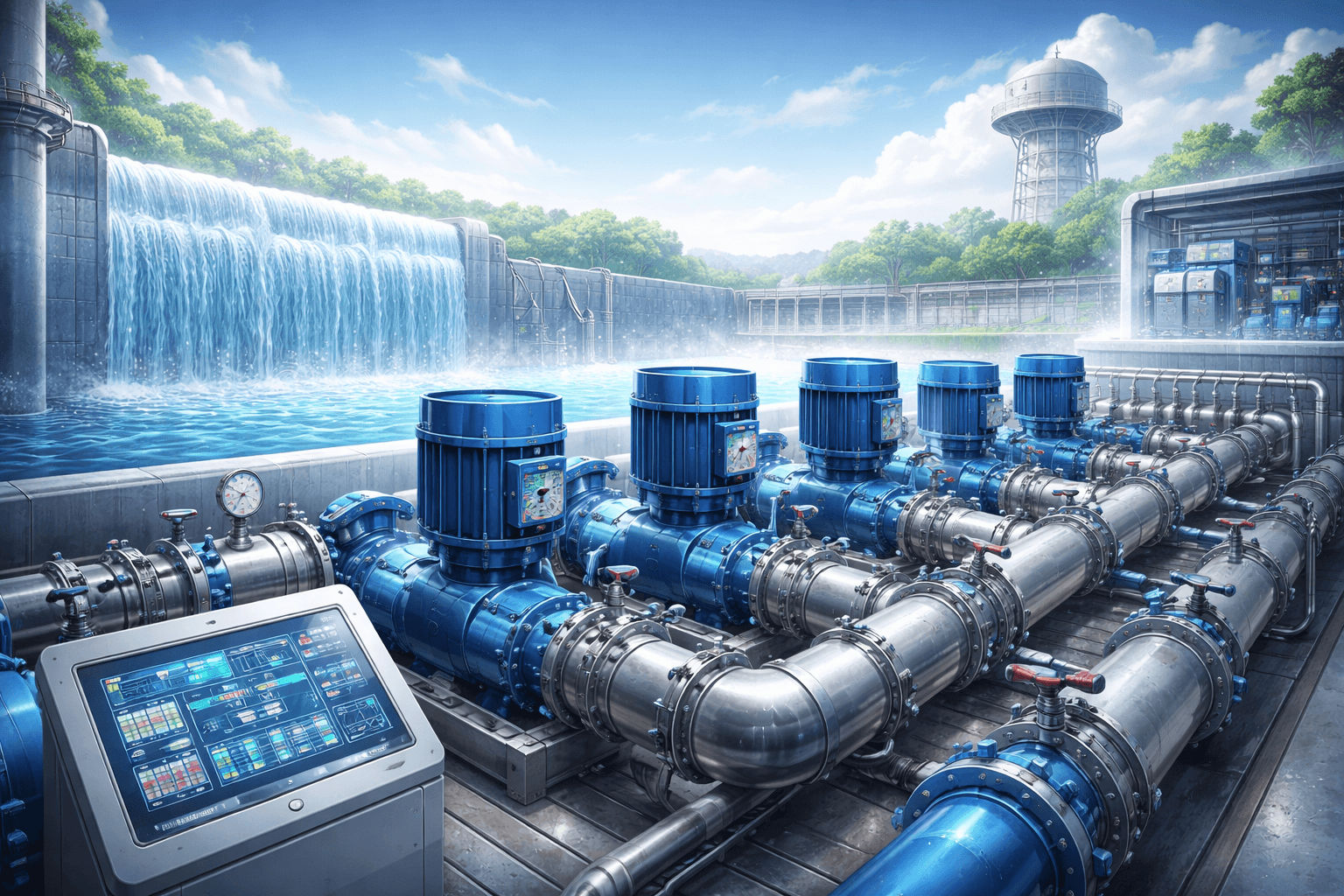
Role
The water pumping system ensures stable pressure and flow throughout the entire facility, especially for:
- High-rise buildings
- Factories and industrial zones
Common Types of Pumps
- Centrifugal pumps
- Booster pumps
- Submersible pumps
System Configuration
- Main pump + standby pump
- Control panel (inverter or relay-based)
- Pressure tank
Advantages
- Automatic operation
- Energy savings when using inverters
- Extended equipment lifespan
3. Fire Fighting Pump System
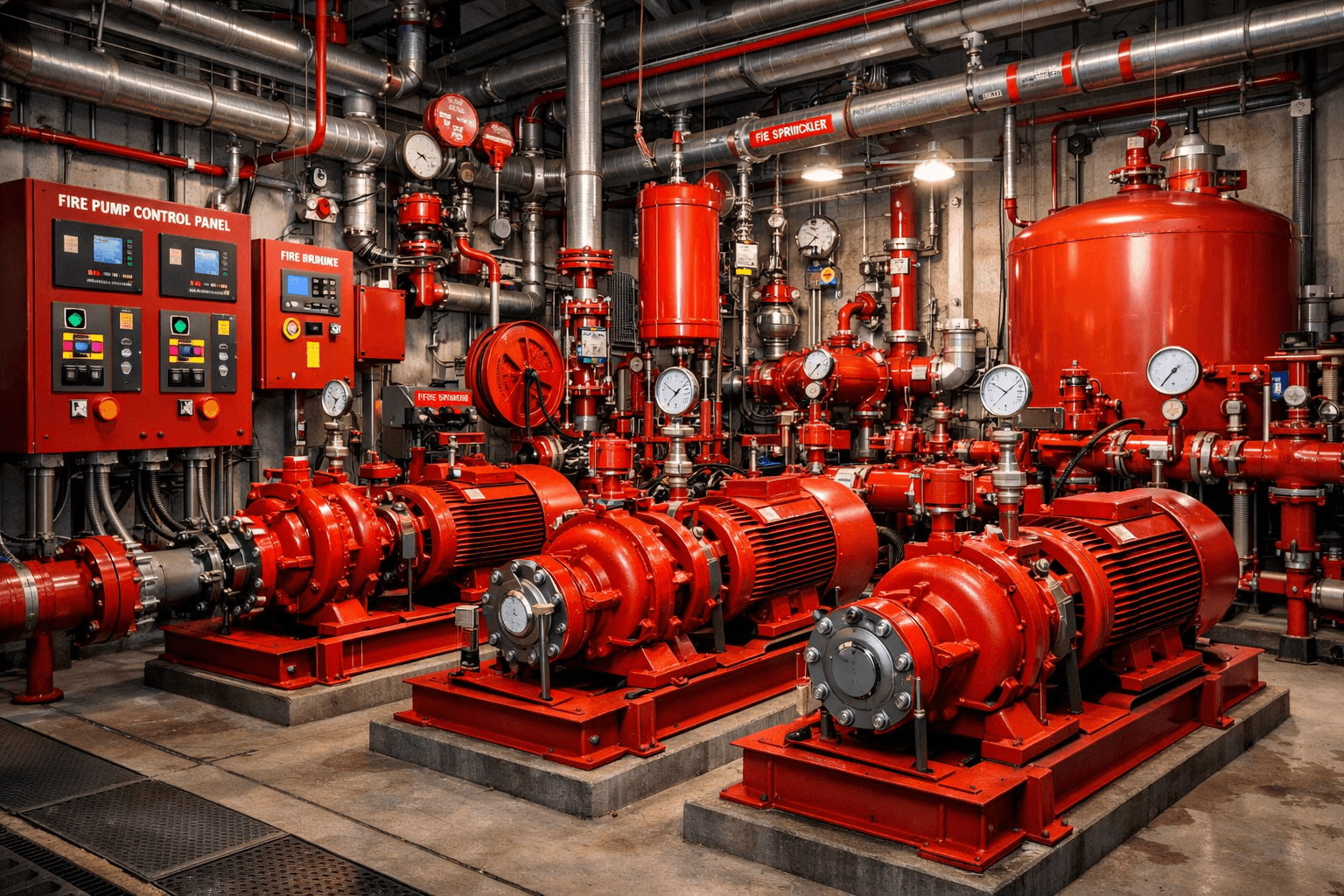
Function
Provides high-pressure water to the fire protection system in case of emergencies.
Main Components
- Electric fire pump
- Diesel backup pump
- Jockey pump (pressure maintenance pump)
- Fire protection control panel
Operating Principle
- When system pressure drops → the jockey pump activates
- In case of fire → the main pump is triggered
- In case of power failure → the diesel pump operates
Technical Requirements
- Independent operation with high reliability
- Compliance with fire protection standards (NFPA, TCVN)
- Always equipped with backup power sources
4. Sprinkler System
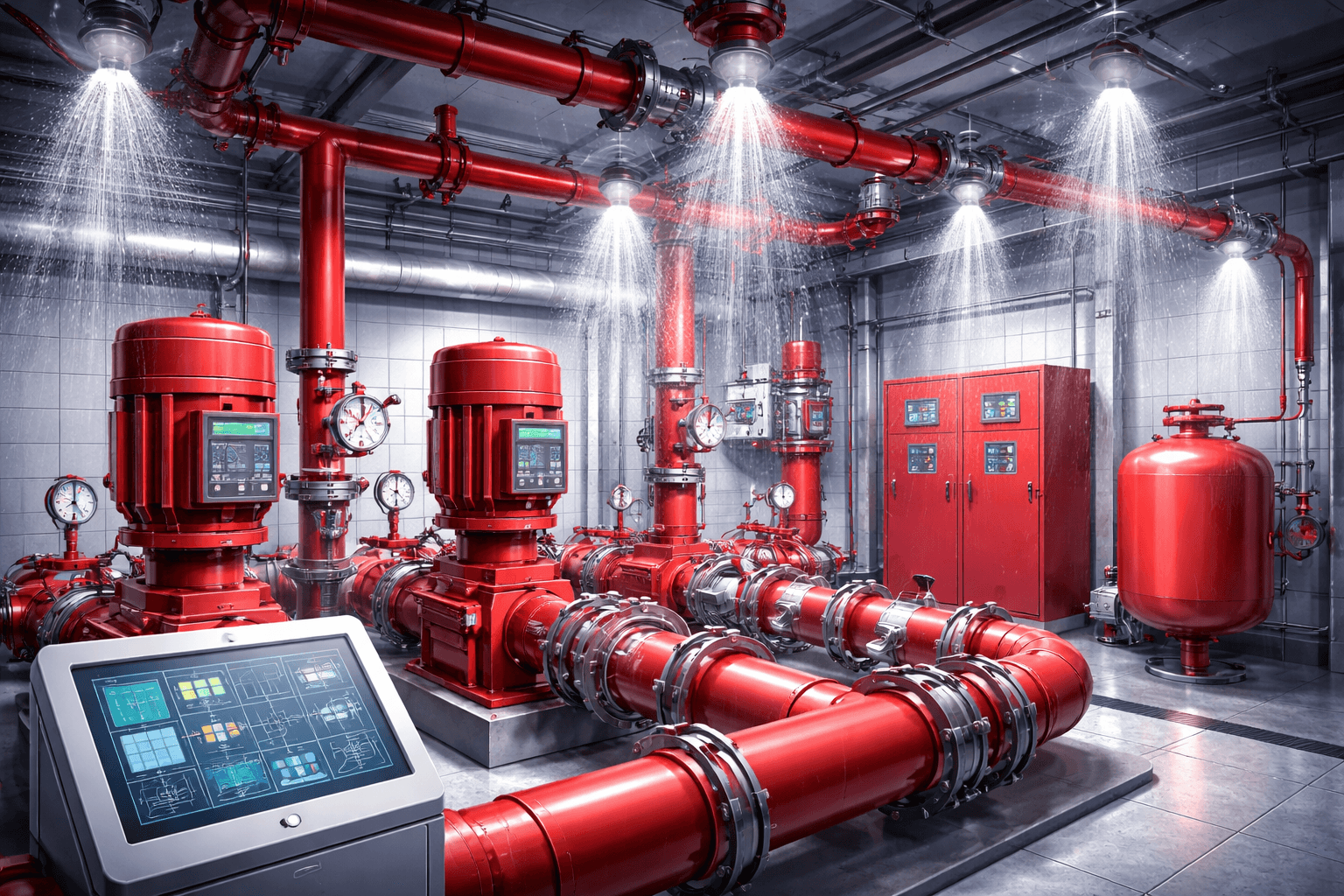
Concept
A sprinkler system is an automatic fire suppression system that uses water and is activated when the ambient temperature reaches a certain threshold.
Components
- Sprinkler heads
- Fire water supply piping
- Alarm valve
- Water storage tank & fire pumps
Operating Principle
- When the temperature rises → the glass bulb breaks
- Water is discharged directly onto the fire area
- The system activates automatically without human intervention
Advantages
- Fast response with high effectiveness
- Reduces property damage
- Suitable for factories, warehouses, and shopping centers
5. Fire Hydrant System
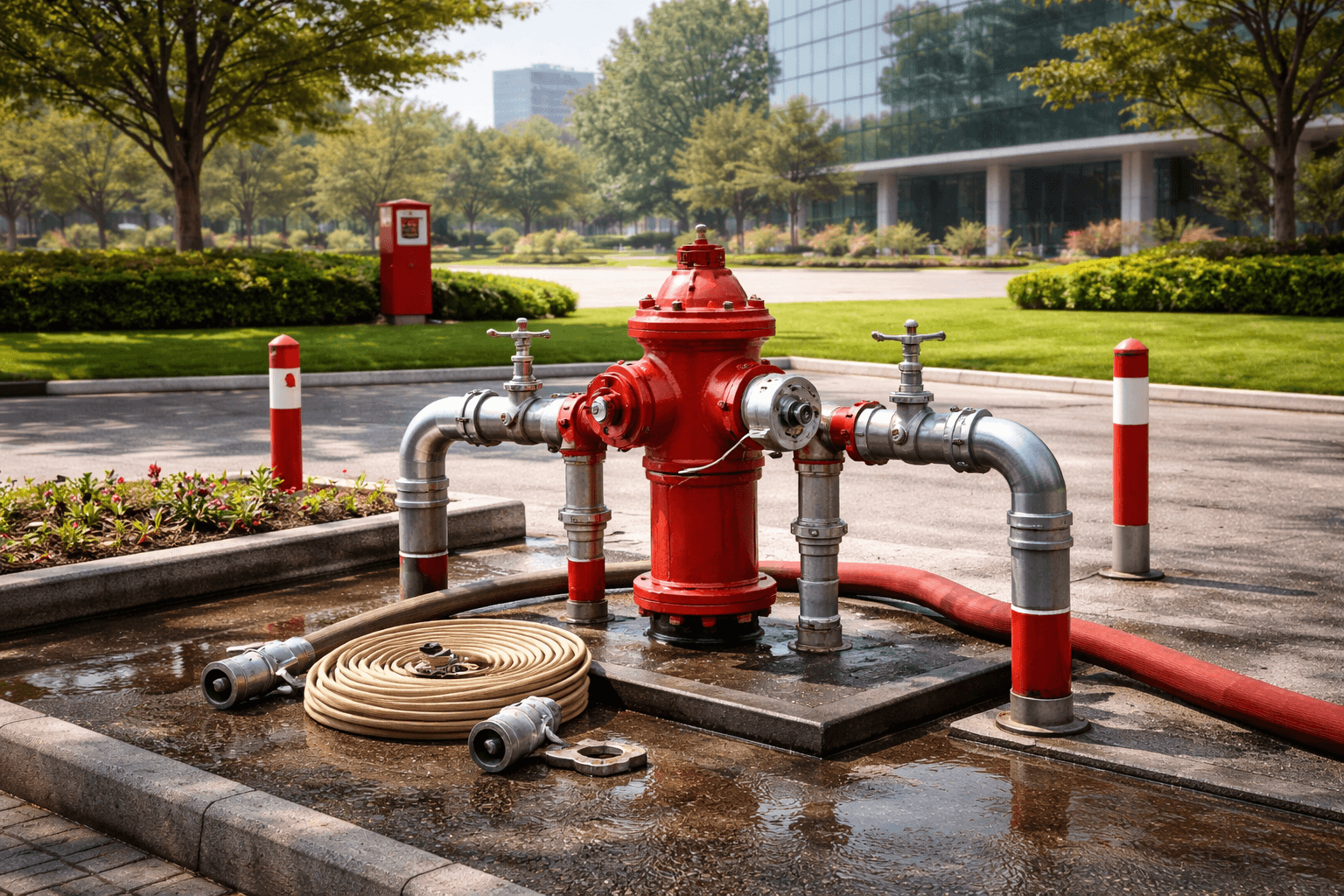
Concept
The fire hydrant system is a manual firefighting system that supports fire protection forces.
Types
- Indoor hydrants
- Outdoor hydrants
Components
- Fire hose cabinet (hose, nozzle, valve)
- Water supply piping
- Fire pumps
Role
- Provide a direct water supply for firefighters
- Support the handling of large-scale fires
Summary
The Plumbing (P) system includes:
- Water supply system
- Water pumping system
- Firefighting pump system
- Sprinkler system
- Fire hydrant system
All of these play a critical role in:
✔ Supporting daily operations and production
✔ Enhancing building safety
✔ Complying with fire protection regulations
✔ Increasing the value and lifespan of the facility