


What is SCADA? Structure and Functions of SCADA in Industry 4.0
In today’s technological era, data plays a critically important role in manufacturing operations. As a result, the need for effective solutions to collect and manage essential data sources is increasingly prioritized by manufacturers. Among these solutions, SCADA is considered one of the most optimal systems, not only addressing these requirements but also significantly supporting the operation of production systems.
1. What is SCADA?
SCADA (Supervisory Control and Data Acquisition) is a system used for monitoring, controlling, and analyzing data in real time, commonly applied in manufacturing facilities and industrial plants.
SCADA systems are designed to control and monitor all operational data of a factory or specific production equipment. Although initially introduced in the 1960s for use in water systems and power plants, SCADA has gradually become an essential system in most manufacturing facilities and industrial environments today.
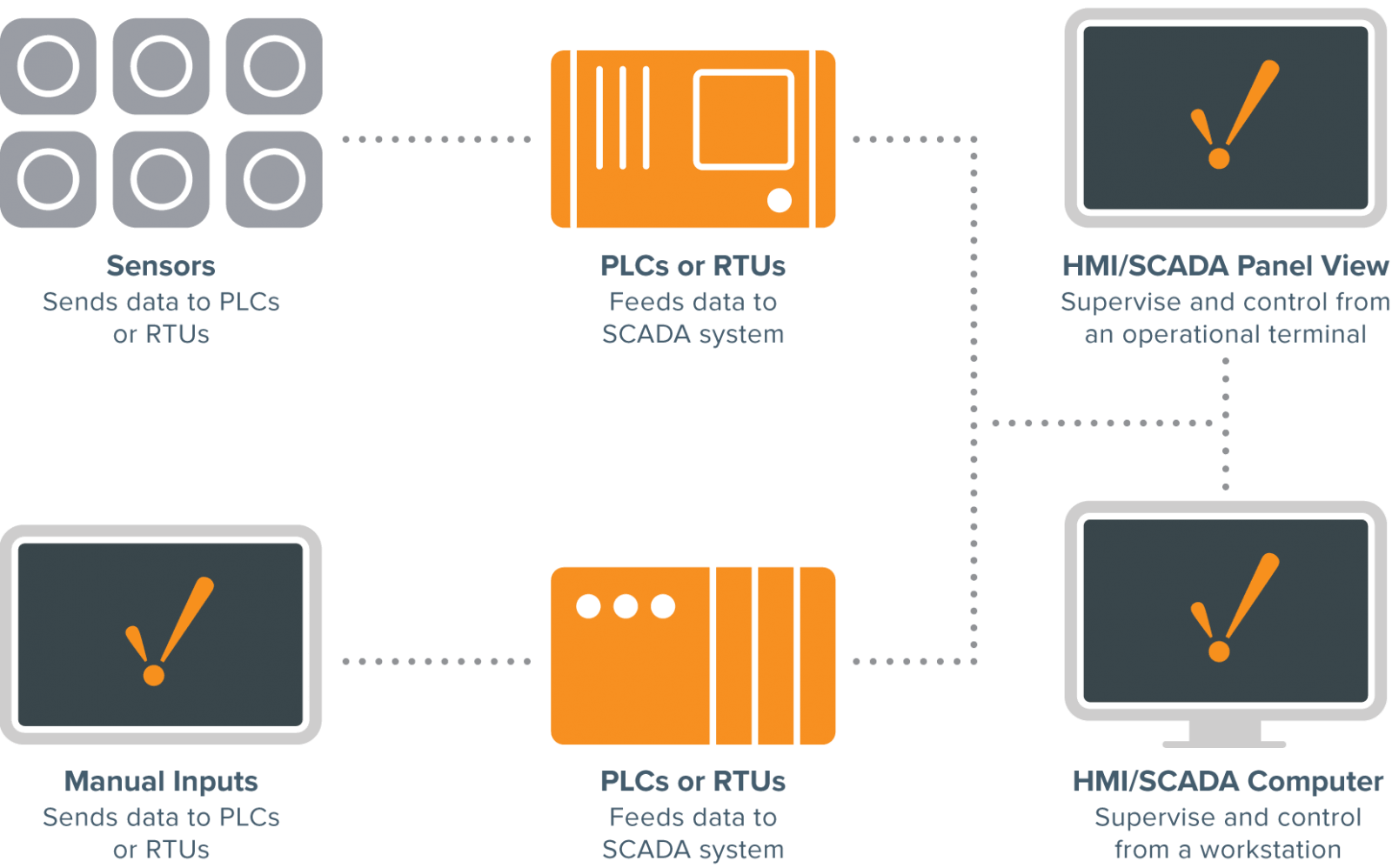
SCADA system
Simply Put, SCADA is a System Used to:
✅ Monitoring: Collect data from sensors or machinery (e.g., temperature, pressure, flow rate, etc.).
✅ Control: Send control signals to devices (e.g., turning pumps on/off, adjusting valves, etc.).
✅ Data Acquisition & Storage: Store data for analysis, reporting, and future management purposes.
✅ Visualization: Provide an intuitive graphical interface (called HMI – Human-Machine Interface) that allows operators to easily monitor system status.
HMI software also enables factory staff and managers to directly interact with various types of equipment, including valves, sensors, motors, and pumps. Any event that occurs can be recorded in log files and used immediately when needed.
2. Components of a SCADA System
In general, a SCADA system consists of five main components:
- Human-Machine Interface (HMI):
The interface between operators and machines. HMI processes data from each tag and presents it to operators for monitoring and control. - Supervisory System:
This system collects data from all tags and sends commands or requests to control operational processes. - Remote Terminal Units (RTUs):
RTUs connect to sensors, convert signals into digital data, and transmit them to the supervisory system for storage in a distributed database. - Programmable Logic Controllers (PLCs):
PLCs are used as field devices due to their flexibility and cost-effectiveness compared to dedicated RTUs for specific processes. - Communication Infrastructure:
This provides connectivity between the supervisory system and field devices such as RTUs and PLCs, enabling users to send commands and receive data.
Communication is the most critical link for a SCADA system to function effectively. The way communication is managed between the HMI, RTUs, and PLCs largely determines the overall success of the SCADA system.
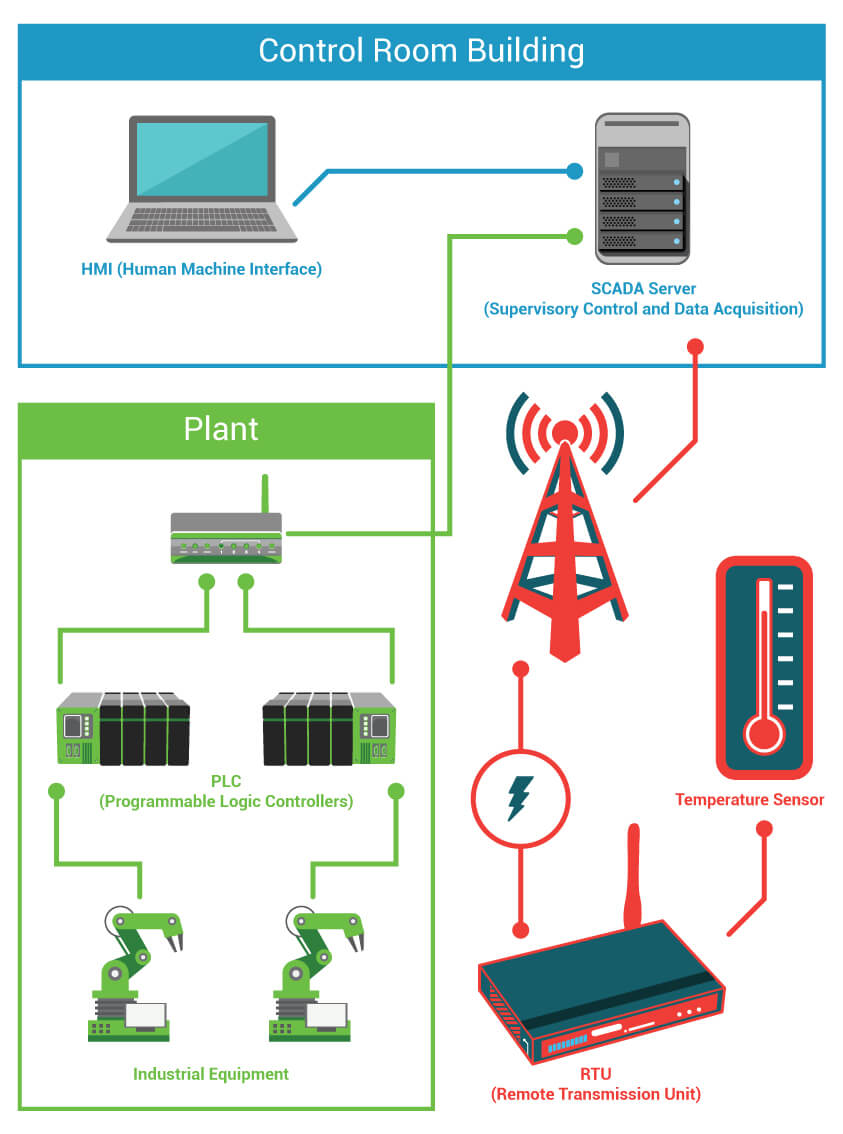
Basic SCADA system diagram
With SCADA, companies can control industrial processes on-site or remotely, thereby interacting with components such as motors, pumps, or sensors. Depending on the application objective, SCADA systems can include relatively simple or complex configurations and are suitable for use in a wide variety of industries. On the other hand, the system is also very flexible and highly adaptable, and operates on many different operating systems. Windows NT to UNIX or Linux.
3. Data Acquisition Mechanism of a SCADA System
The data acquisition mechanism of a SCADA system operates through a structured, multi-layered process involving various devices. Below is a step-by-step explanation for better understanding:
Sensors & Measuring Devices
This is the first layer, directly interacting with the physical environment (temperature, pressure, water level, current, speed, etc.).
Sensors convert physical (analog) signals into electrical or digital signals.
Local Control Devices: PLC or RTU
PLC (Programmable Logic Controller) or RTU (Remote Terminal Unit) receives signals from sensors.
These devices perform preliminary data processing (noise filtering, signal conversion) and temporarily store the data.
Additionally, PLCs/RTUs can execute automatic control commands locally (e.g., turning a pump on/off when water reaches a certain level).
Data Transmission to SCADA Center
After processing, PLCs or RTUs transmit data via communication networks (Ethernet, radio, mobile networks, fiber optics, etc.) to the central control system.
Common communication protocols include Modbus, DNP3, IEC 60870-5-104, etc.
SCADA Server (SCADA Master Station)
This is the “heart” of the system, receiving data from multiple PLCs/RTUs.
It stores data in a historical database (historian) for analysis, reporting, and alerting.
The server also processes, aggregates data, and sends control commands back to PLCs/RTUs when necessary.
Visualization on HMI
Real-time and historical data are displayed in graphical formats such as charts, dashboards, and tables on the HMI (Human-Machine Interface).
Operators can monitor, make decisions, and control the system directly through the HMI.
4. Functions of a SCADA System
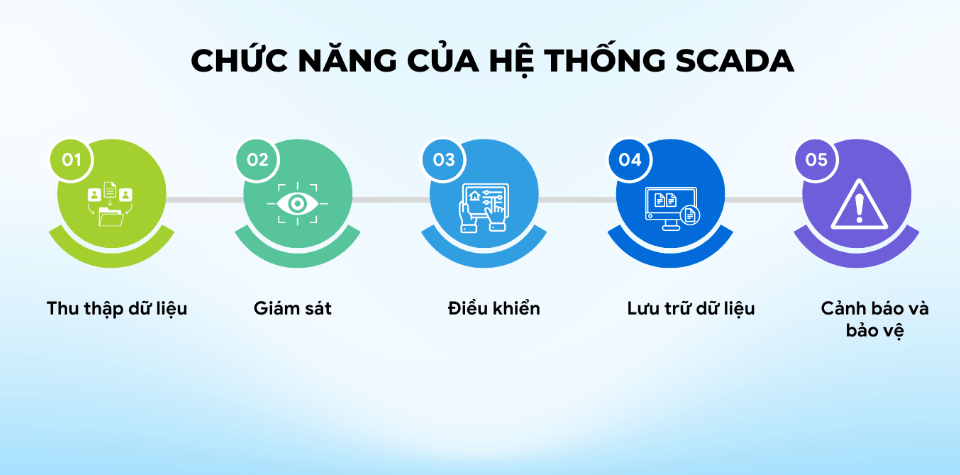
Main functions of the SCADA system
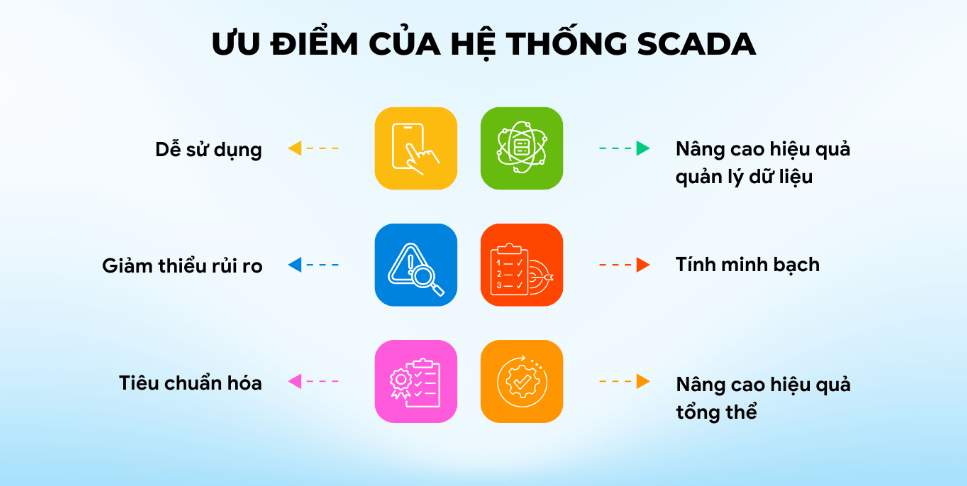
Advantages of SCADA systems
- Ease of Use:
Thanks to the HMI interface, SCADA systems can be operated quickly, easily, and safely. This enables remote access and simultaneous management of multiple machines within a factory. - Risk Reduction:
With real-time fault detection, SCADA systems can immediately notify operators of any issues. In addition, systems enhanced with predictive analytics can identify potential risks before failures occur, helping improve Overall Equipment Effectiveness (OEE) and reduce maintenance efforts. - Standardization:
All relevant process data is consolidated on a unified platform, allowing users to gain a comprehensive overview. By utilizing various tools within a centralized system, the full potential of SCADA can be effectively leveraged. - Improved Data Management Efficiency:
SCADA facilitates the collection, management, retrieval, and analysis of production data. Records are automatically stored in a central location and can be transmitted to connected systems such as MES or ERP. - Transparency:
Real-time data collection and management through the HMI interface enhances process visibility. SCADA systems also include tools for data evaluation and reporting, enabling users to access production information anytime, both on-site and remotely. - Enhanced Overall Efficiency:
With automation, user-friendly tools, and transparent data management, SCADA systems help optimize processes, improve operational efficiency, and reduce associated costs.
6. Four Types of SCADA Systems
SCADA systems come in various types, often referred to as different SCADA architectures. As technology evolves, these systems continue to improve.
6.1. First Generation: Monolithic SCADA Systems
In the past, manufacturers utilized minicomputers to optimize their processes and equipment.
At that time, monolithic SCADA systems were widely used but did not rely on standard network services. As a result, they operated independently, meaning one computer could not connect to other systems. Remote sites were connected through a backup mainframe system.
This setup ensured redundancy for first-generation SCADA systems. The monolithic concept was primarily used as a fallback in case the main system failed. However, these legacy SCADA systems had limitations in monitoring sensors and generating alerts when activities exceeded predefined thresholds.
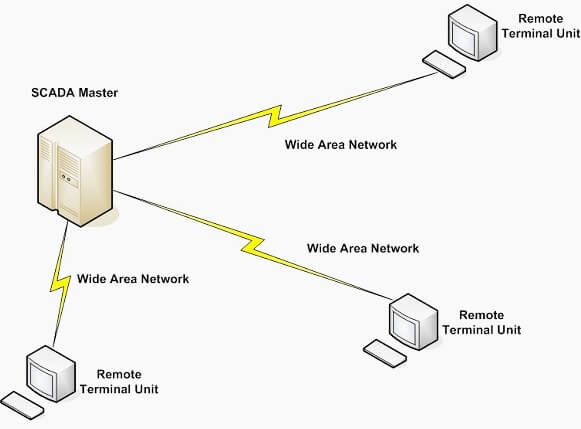
First generation: monolithic SCADA systems (Monolithic SCADA Systems)
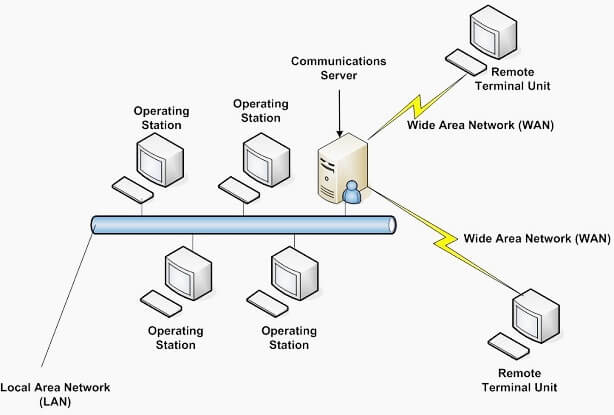
Thế hệ thứ hai: hệ thống SCADA phân tán (Distributed SCADA Systems)
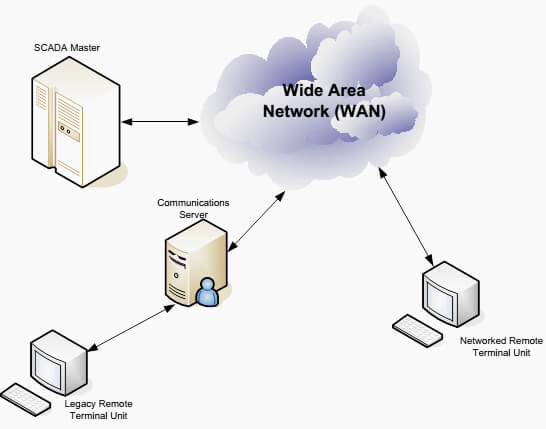
Thế hệ thứ ba: hệ thống SCADA nối mạng
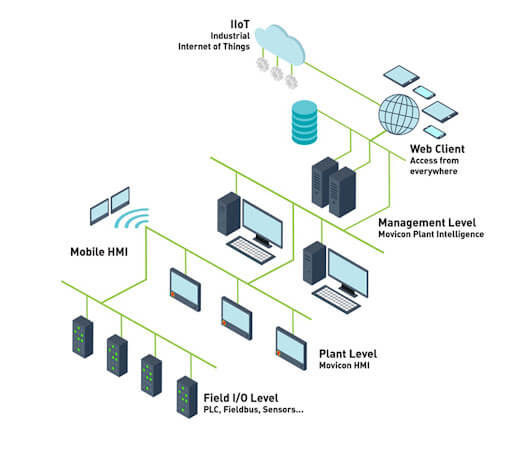
Thế hệ thứ tư: Hệ thống SCADA 4.0
7. In what fields can SCADA be used?
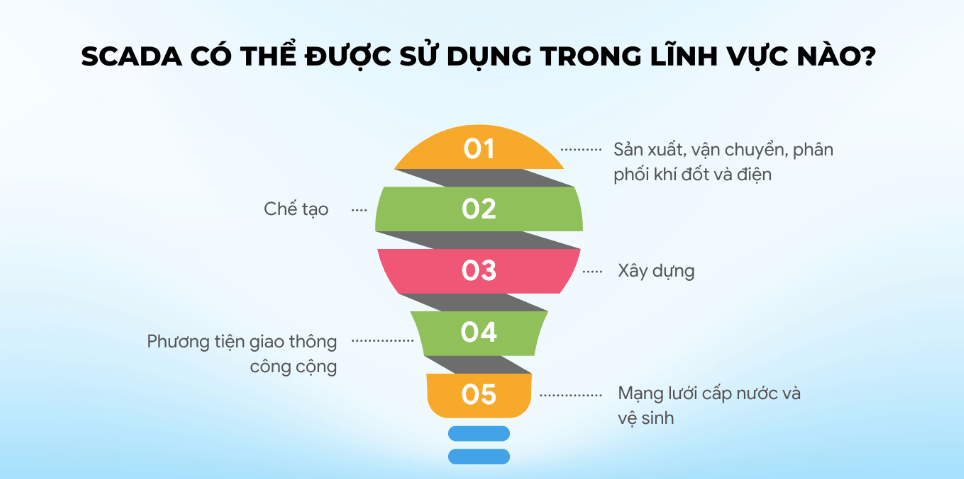
Applications of SCADA Across Industries
Gas and Electricity Production, Transmission, and Distribution
In these sectors, utilities use SCADA systems to monitor electrical current and line voltage, supervise circuit breaker operations, and more.
These tools also help monitor and control pipelines, remotely manage storage facilities, pumps, or refineries, and regulate the distribution of electrical power from various energy sources such as coal, nuclear, or gas.
Manufacturing
In manufacturing industries, SCADA systems are used to manage production component lists, optimize industrial automation, and monitor quality control systems and processes.
Construction
Building management companies often use SCADA systems to control heating, air conditioning, refrigeration systems, and lighting within residential or commercial buildings.
Public Transportation
Public transport services can use SCADA systems to regulate power for subways, trams, and trolley systems. In other cases, SCADA is used to automate railway signaling systems, track and locate buses and trains, control barriers at railway crossings, and manage traffic flow—for example, detecting irregular traffic network conditions.
Water Supply and Sanitation Networks
SCADA systems are also widely used in the sanitation sector.
Governments and municipalities use these systems to monitor and control water treatment plants, as well as facilities for collecting and processing wastewater under optimal conditions.
Beyond these, many other industries also utilize SCADA solutions, including agriculture and irrigation, pharmaceutical manufacturing, and telecommunications.
Conclusion
With the rapid advancement of automation in the era of Industry 4.0, SCADA systems are becoming increasingly widespread. As data collection, analysis, and processing demand higher levels of automation, SCADA has emerged as an optimal solution to support efficient system operations, improve factory productivity, and reduce operational costs—ultimately enhancing a company’s competitiveness in the market.